Hand forged in Colorado Springs · Every knife made one at a time
Categories
About Nathan Downing
Ten years at the anvil in Colorado Springs, from a first knife that sold to Germany to a shop that still only has one person in it.
The maker
It started with one knife
and a buyer in Germany.
Nathan Downing sold his first knife in 2016. It did not go to a neighbor or a friend at work. It went to a buyer in Germany, which is a strange way to start a business in Colorado Springs, and it told him something useful straight away: there are people who will go looking for a hand made blade, and they will find you if the work is good enough.
Ten years on, that has not changed much. Silverline knives have gone out to people who wanted something specific enough that a store could not supply it, and the shop has stayed exactly the size it was: one person, one set of hands, one knife at a time.
Nathan is self taught. That means the first few years were largely a record of things that did not work. Blades that warped in the quench. Heat treats that came out soft. Handles that looked right and felt wrong in the hand. Forge welds that separated. There is no shortcut through that part and no book that replaces it, only the willingness to keep ruining steel until you stop ruining it.

What he is trying to do
"Heirloom quality for your average
person at an affordable
price."
Those are his words, and they are the whole argument. Hand forged knives have drifted into being collector objects, priced so that the people who would actually use one every day cannot justify it. Nathan builds to the standard of a knife that gets handed down, and prices it for the person who is going to wear the finish off it first.
The work
What ten years buys
Not shortcuts. The steps are the same as they were in 2016. What changes is the failure rate.
- Reading steel Knowing by color and by feel when a billet is ready to move and when it is about to crack, without stopping to measure.
- Heat treatment The single step that decides whether a knife is good. Done in the shop, blade by blade, rather than sent out in a batch.
- Forge welding Layering and folding damascus so the pattern is structural rather than applied, and so the weld actually holds.
- Grinding Taking an edge thin enough to cut properly without taking it so thin it chips on the first bone.
- Handle fitting Shaping to the tang and to the hand, then finishing so there is nothing to catch when you choke up on it.
- Knowing when to stop The hardest one. A knife can be over-polished, over-decorated and over-thought into being worse.

The shop
One person, start to finish
There is no production line here and no contract work sent out. The same person who draws the profile does the forging, the heat treat, the grinding, the handle and the sheath, and answers the email you send about it.
That is a limit as much as it is a selling point. It means the queue is real, lead times are honest rather than optimistic, and a big order takes as long as it takes. It also means there is nobody to blame if a knife is not right, which is a good pressure to work under.
If you want to talk to the maker before you buy, you already are. The phone number and the email on this site go to Nathan.
Silverline is one man, one anvil and one knife at a time. That is the constraint, and it is also the point.
Nathan Downing · Colorado Springs, Colorado
Colorado Springs
See what is on the bench
Browse what is finished and in stock, or start a conversation about a build of your own. Either way it is Nathan on the other end.
Contact the Shop
Questions about an order, a custom build, sharpening or a repair. Every message goes straight to Nathan.
silverline.knife
Where
Colorado Springs, CO
A working shop rather than a storefront. Shipping nationwide across the United States.Before you write
What to include
None of this is required, but every one of these saves a round trip.
- For an existing order The name it was placed under and roughly when. That is enough to find it.
- For a custom build Use the custom orders form instead of this one. It asks the questions in the right order and nothing gets missed.
- For sharpening or repair A photograph of the blade and the edge, plus whether it is a Silverline knife.
- For wholesale What kind of outlet, roughly what volume, and what timeline you are working to.
Response time
This is a one-man shop and the phone is not always in his hand. Expect a reply within a couple of business days. If it is urgent, call rather than email.
Sharpening and repair
Silverline knives can come back to the shop for sharpening or repair. Get in touch before you ship anything so you know what it will cost and where to send it.
Follow the work
New knives and work in progress go up on Facebook before they reach the shop page.
Send a message
Get in touch
Tell us what it is about and we will come back to you. For a custom build, the custom orders form will get you a quote faster.
Custom Knife Orders
Tell us the blade length, the steel, the handle and the date you need it by. You get a quote and a completion date before anything is cut.
How it works
Four steps, no obligation until you say yes
Send the specifications
Blade length, steel type, handle material and your deadline. The form below walks through every decision and "not sure yet, recommend something" is a perfectly good answer to any of them.
Talk it through, get a quote
Nathan comes back with questions, a description of what he would build, a price and a realistic completion date. Nothing is committed at this stage.
Deposit and build
A deposit holds the slot on the bench. Forging, grinding, heat treat, handle fitting and sheath work all happen here in Colorado Springs.
Photos, then it ships
You see photographs of the finished knife before the balance is due. Then it ships anywhere in the United States.
What to think about
The four decisions that
actually change the knife
Everything else can be worked out on the call. These four set the direction, and it helps enormously if you have thought about them before you write.
- What is it for A knife built for field dressing and a knife built for defensive carry are different objects. Start here and the rest follows.
- Blade length Longer is not better. Tell us where it will be carried and the length works itself out.
- Monosteel or forge welded Monosteel is straightforward and costs less. Forge welded damascus gives you the pattern and a hard edge with a tough spine, and adds time.
- Handle material Figured wood for looks and warmth, micarta or G10 for weather, cord or leather for grip. Say what conditions the knife will live in.
Lead times, honestly
This is a one-man shop, so a custom build waits its turn on the bench. A simple monosteel knife is a matter of weeks. A forge welded damascus blade with a fitted handle and a leather sheath takes longer, and a matched kitchen set longer again.
You will be given a real date rather than an optimistic one, and if it is a gift with a hard deadline, say so in the form. If the date cannot be met you will be told before you pay a deposit rather than after.
Budget
There is a budget field on the form and it is worth filling in honestly. It is not a haggling tactic. It tells Nathan whether to steer you toward monosteel or damascus, and it is far better to find out at the quote stage than three emails in.
Questions
Custom order questions
How much does a custom knife cost?
It depends on blade length, steel and handle, and the honest range is wide. A short monosteel EDC blade with a micarta handle sits at the bottom of it. A long forge welded damascus blade with a fitted figured wood handle and a hand stitched leather sheath sits at the top. Put a budget in the form and you will get a real number back rather than a brochure range.
How long does a custom knife take?
Weeks for something simple, longer for damascus, a fitted sheath or a matched set. It is one person working through a queue, so the honest answer depends on what is already on the bench when you write. You will be given a specific date with the quote, before any deposit changes hands.
Do I have to pay everything up front?
No. A deposit holds the slot on the bench and starts the work. The balance is due after you have seen photographs of the finished knife, not before.
Can I send a picture of a knife I like?
Yes, and it is genuinely useful. There is a file upload on the form. Reference images tell us more in ten seconds than a paragraph does. What will not happen is a copy of another maker's knife, marked or otherwise, but using one as a starting point to describe what you are after is exactly what they are for.
Can you engrave a name or a date on it?
Usually, yes. Say what you want and where you want it in the form. Some finishes and some handle materials take marking better than others, so it may steer the other choices slightly.
Do you ship outside the United States?
The first Silverline knife ever sold went to Germany, so it is not out of the question, but knife import rules vary enormously by country and some of them are strict. Ask before you order and we will work out whether it can be done legally to your address.
Start here
Tell us about the knife
The more detail the better. What it is for, what you have carried before, and anything it has to survive. Everything comes straight to Nathan.
Shop Handmade Knives
EDC, tactical, hunting and kitchen knives, every one forged and finished by hand in Colorado Springs. Pick a category to see what is currently available.
What you are buying
"Heirloom quality" is a claim.
Here is what backs it.
Anyone can put the word heirloom on a product page. What it should mean is that the knife outlives the person who bought it, and that comes down to three things: what the steel is, how it was heat treated, and whether the handle is actually attached to the blade or just glued to the outside of it.
Silverline blades are forged from high carbon steel and heat treated in the shop, one at a time, so the hardness is checked against that specific blade rather than a batch average. Handles are fitted to a full tang, pinned, and shaped after they are on the knife instead of before.
None of that is exotic. It is just the slow version of every step, which is why a one-man shop can do it and a factory cannot.
The affordable part
Nathan's own words for what he is trying to do are heirloom quality for your average person at an affordable price. Prices sit well under what a comparable hand forged knife costs from a name shop, because there is no showroom, no staff and no middle man between the anvil and the listing.
If a knife you want is out of stock, a custom build is usually the faster route than waiting for a restock.
Care
Looking after a carbon steel knife
High carbon steel takes a better edge than stainless and holds it longer. The trade is that it will rust if you leave it wet. That is the entire maintenance requirement.
- Dry it Wipe the blade dry after any contact with water, food acid or blood. Thirty seconds, every time.
- Oil it A thin film of mineral oil, gun oil or plain cooking oil on the blade before it goes back in the sheath or the block.
- Let the patina happen A carbon blade grays over as it is used. That gray layer protects the steel. Do not polish it off.
- Strop before you sharpen Most edges that feel dull only need a few passes on a strop. Save the stones for real damage.
- Never the dishwasher Heat, detergent and steam will ruin a carbon blade and a wood handle in a single cycle.
- Send it back if it needs it Sharpening and repair on a Silverline knife go through the shop. Get in touch first.
Not seeing it?
Have it built instead
If the knife in your head is not on a shelf, describe it. Blade length, steel, handle, the date you need it by, and you will get a quote back before anything is cut.
Hand forged in Colorado Springs
Knives built to be carried , not displayed.
Silverline Knife Designs is one maker, one anvil and one knife at a time. Every day carry, tactical, hunting and kitchen blades, forged and finished by hand, priced for the person who is going to use them.
What we make
Four kinds of knife. One way of making them.
Every blade on this site was forged, ground, heat treated, handled and finished by one person in one shop. Pick the category closest to how you plan to carry it.
The difference
Heirloom quality at a price a
working person
can actually pay.
A hand forged knife has a reputation for being something you look at rather than something you use. That is a pricing problem, not a craft problem. Silverline exists to close that gap: real forge work, real heat treatment, real handle fitting, sold to the person who is going to put it in a pocket or a sheath and wear the finish off it.
How a Silverline knife is built
Forged, not cut out of a sheet.
Stock removal is the fast way to make a knife: trace a shape onto flat bar, grind away everything that is not the blade, send it out for heat treat. It works, and most knives in this price range are made that way.
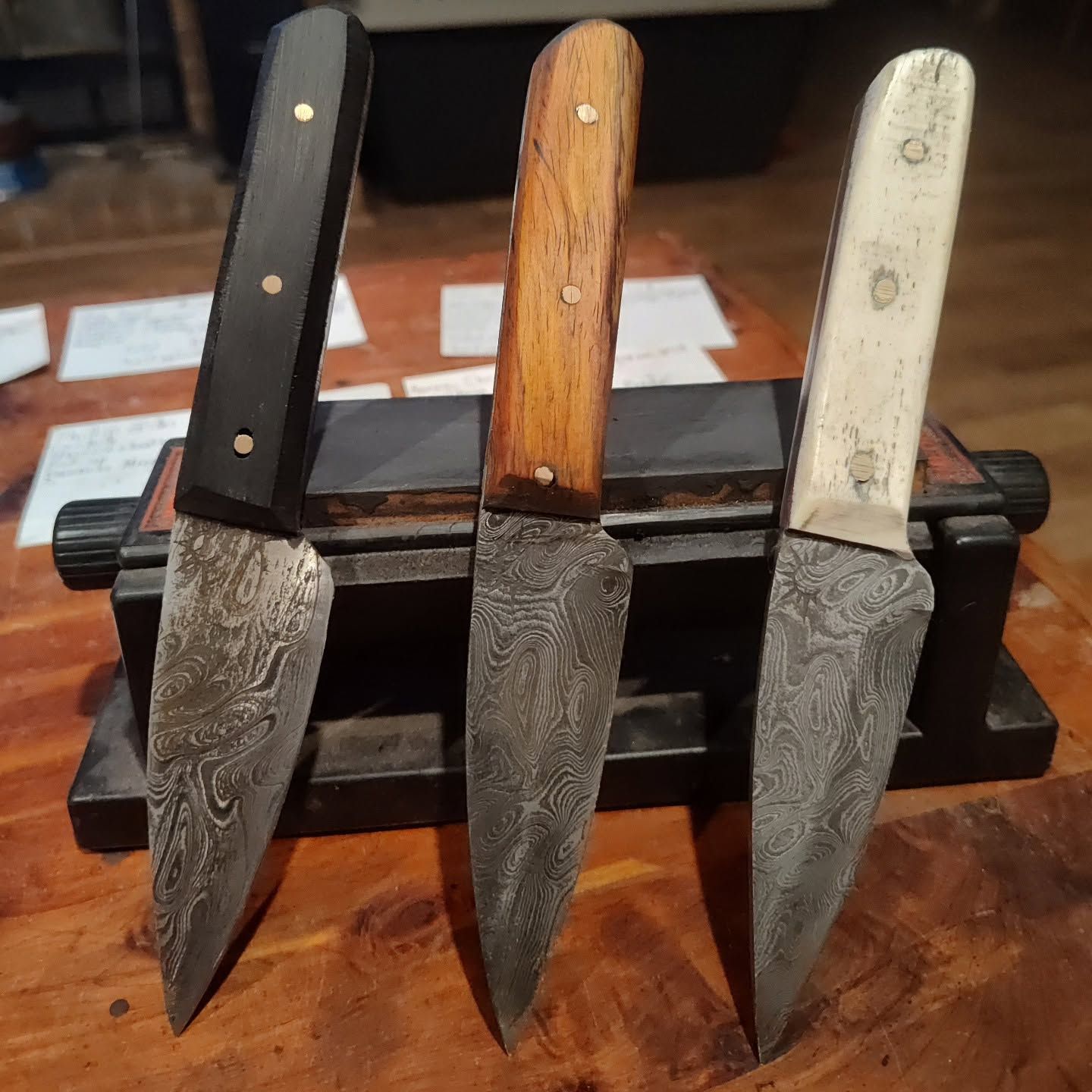
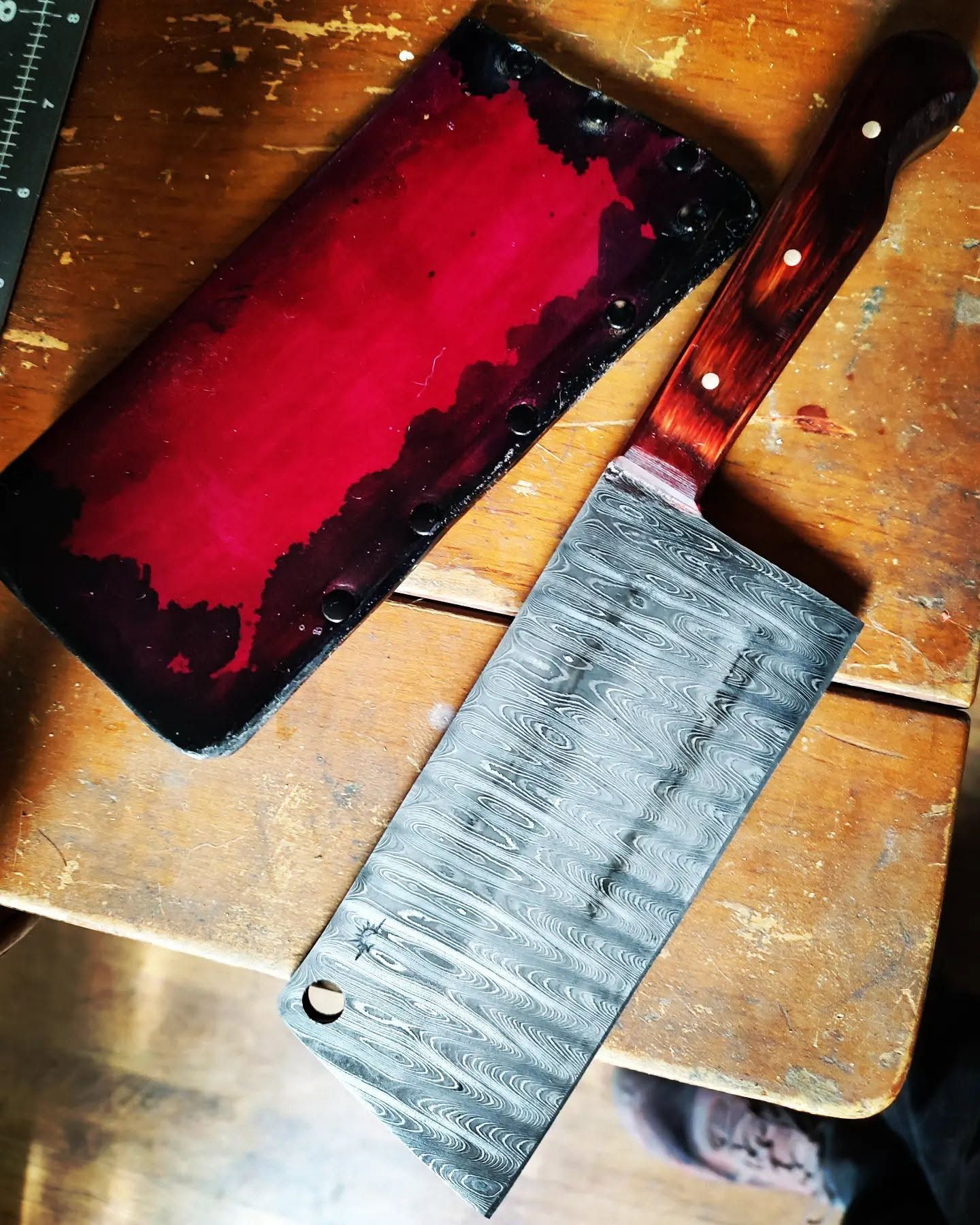
Silverline blades start at the forge. Steel gets moved rather than removed, which packs the edge and lets the profile follow the grain instead of cutting across it. Damascus blades go further, forge welding layers together and folding them until the pattern is in the steel rather than etched onto it.
Heat treat happens in the shop, blade by blade, because that is the step that decides whether an edge holds. Then the handle is fitted by hand, shaped to the tang, and finished until nothing catches when you choke up on it.
Materials
What you can specify
Every one of these is on the table for a custom build, and most of them show up in the shop listings too.
- Monosteel A single high carbon steel, heat treated hard and taken to a clean satin or a blued finish. The straightforward, hard working choice.
- Forge welded damascus Layers forge welded, drawn out and folded, then etched so the pattern reads. No two blades come out the same.
- Figured wood Stabilized burl and hardwood, fitted to the tang and finished so the grain stays visible under hand oil.
- Micarta and G10 Composite scales for the knives that are going to get wet, dirty and left in a truck.
- Cord and leather Paracord wrap or stacked leather when the grip matters more than the look.
- Kydex and leather sheaths Sheathing built around the specific blade, not pulled off a shelf and made to fit.
The maker
One man, ten years, and a
first sale that went to Germany.
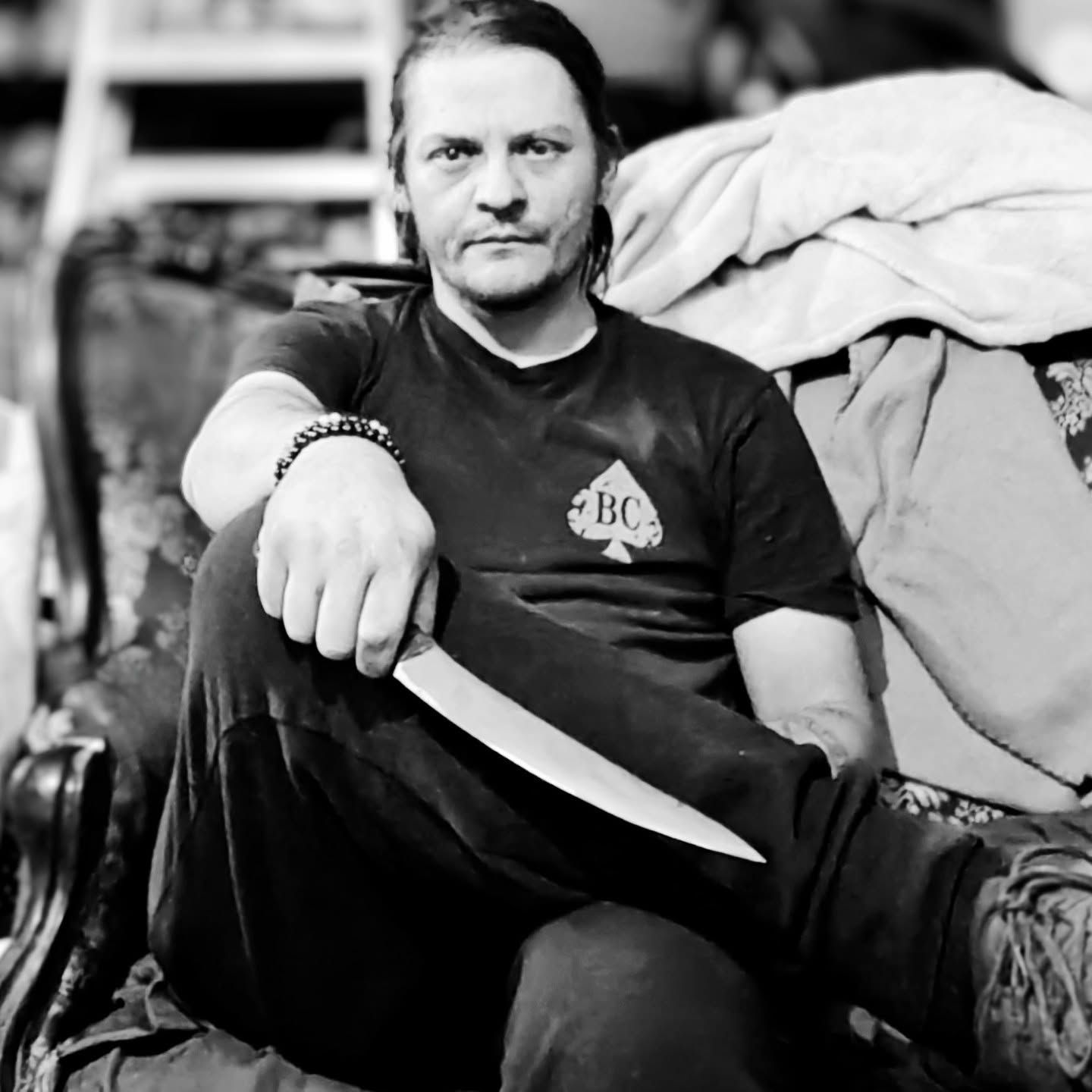
Silverline is Nathan Downing. He sold his first knife in 2016, and it went to a buyer in Germany before it went to anyone in Colorado. Ten years later he is still the only person who touches a Silverline blade between raw steel and the box it ships in.
That is the whole business model. No production line, no contract grinding, no batch of a hundred sitting in a warehouse. Knives get made one at a time because that is the only way one person can make them.
Commissions
Or tell him exactly what you want
Roughly half of what leaves the shop was ordered rather than bought off the listing. If nothing in the store is quite the knife in your head, describe it and get a quote before any steel is cut.
Send the specs
Blade length, steel, handle material and the date you need it by. The form walks through every decision, and "not sure yet" is a valid answer to any of them.
Get a quote
Nathan comes back with questions, what he would build, a price and a realistic completion date. Nothing is committed until you say so.
It gets built
A deposit holds the slot on the bench. You see photographs of the finished knife before the balance is due.
Colorado Springs
Ready when you are
Browse what is finished and in stock, or get in touch about a build. Either way you are talking to the person who makes the knives.
This is the real build. Use its menu and buttons to move around, and scroll inside the frame.
Recent Missions
More Sites We Have
Put in the Field
Every build starts as a free draft. Yours would too.
